Information for decision making
What should be defined before quoting a silo system
What product will be stored?
The type of grain or material determines the density, behavior during transport, necessary aeration, and discharge form. It is also advisable to know the input moisture, percentage of impurities, and product fragility.
How much capacity is really needed?
The total capacity should relate to daily reception, inventory turnover, production, and harvest periods. The largest silo is not always the best decision. In some cases, it is advisable to divide the volume to separate products, batches, or qualities.
What will be the loading and unloading flow rate?
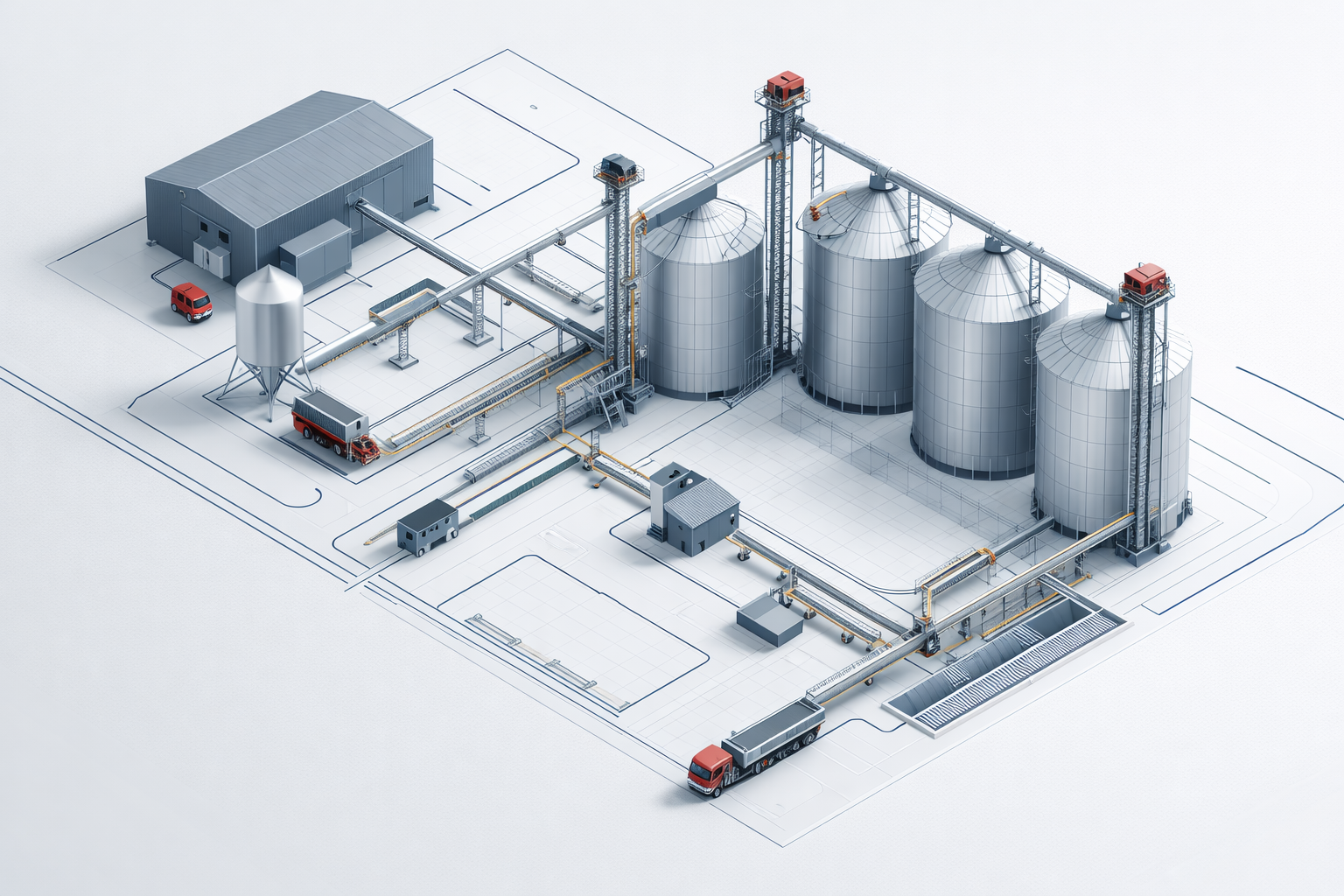
The stored volume and flow rate are different variables. An installation may have enough capacity but take too long to receive or dispatch product if the elevators, conveyors, or transfer points are not coordinated.
How will the product be preserved?
The residence time, ambient temperature, humidity, and required quality help define aeration, thermometry, level measurement, ventilation, and operation protocols.
What infrastructure exists on the site?
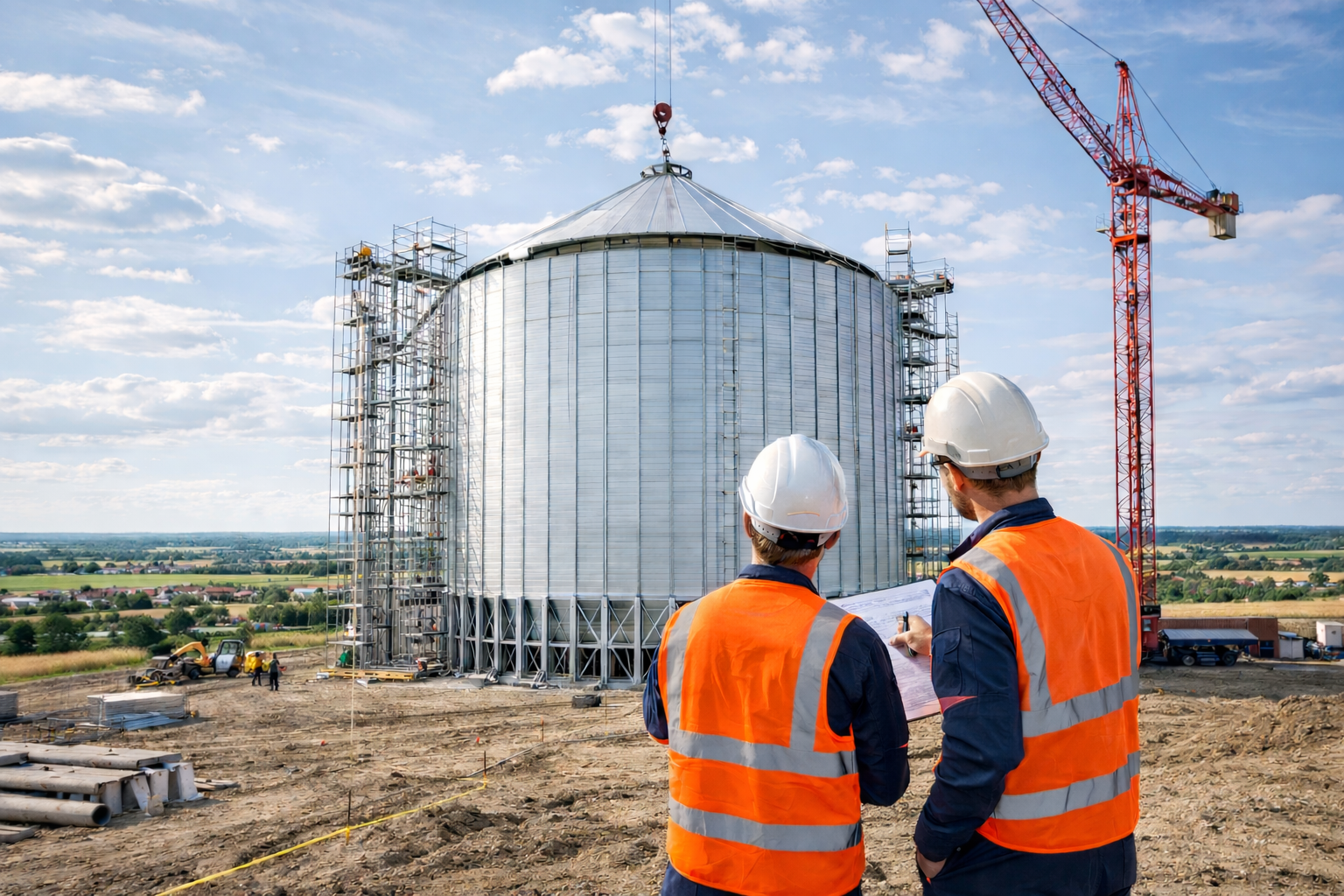
Terrain, foundations, energy, access, heights, distances, buildings, existing equipment, and assembly restrictions must be reviewed. This information reduces subsequent changes and helps define the responsibilities of each discipline.
Is automation required?
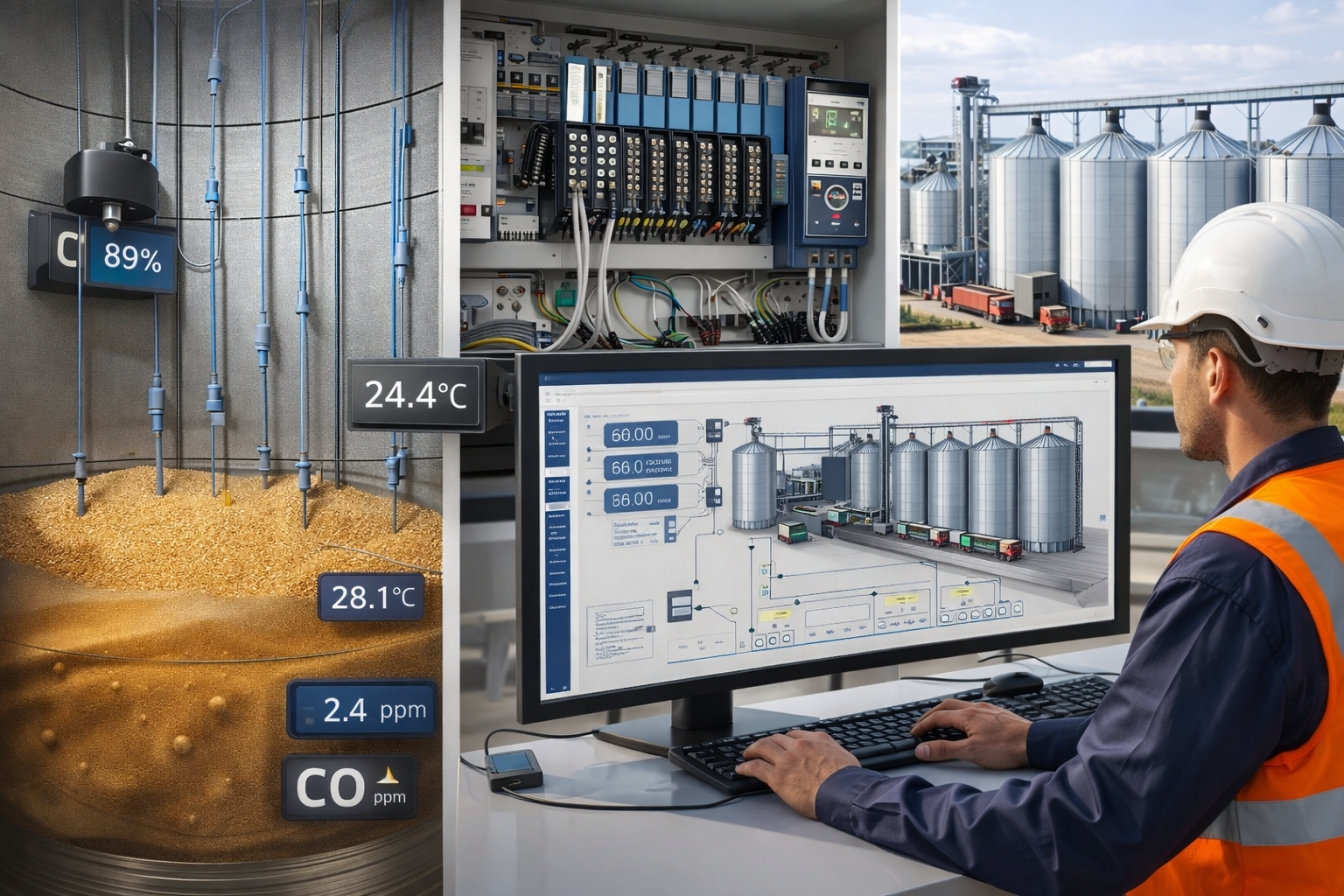
Automation can coordinate routes, starts, stops, alarms, and monitoring. To design it correctly, it is necessary to know the available signals, equipment states, safety priorities, and how the staff will operate.